
Shanghai Exquisite Biochemical Co., Ltd. is one of the leading manufacturers and suppliers of erythorbic acid in China. With a professional production team, we are able to meet the needs of the majority of our customers. We warmly welcome you to buy bulk high quality erythorbic acid from our factory. For price consultation, contact us.
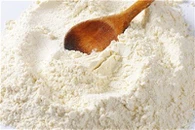
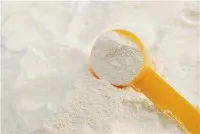
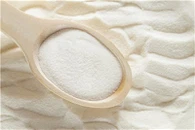
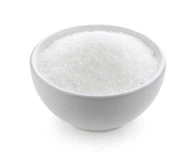
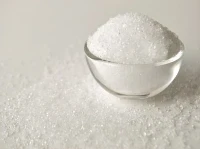
Erythorbic acid is a type of food additive that is used as an antioxidant in various food products. It is a white, odorless and crystalline powder that is water-soluble. Erythorbic acid is similar in chemical structure to ascorbic acid (vitamin C) and it also possesses antioxidant properties. This acid is often used in conjunction with other food additives to enhance their effectiveness.
Chemical Properties
Erythorbic acid occurs as a white or slightly yellow-colored crystals or powder. It gradually darkens in color upon exposure to light.
Uses
Antioxidant (industrial and food), especially in brewing industry, reducing agent in photography.
Erythorbic Acid is a food preservative that is a strong reducing agent (oxygen accepting) which functions similarly to antioxidants. In the dry crystalline state it is nonreactive, but in water solutions it reacts readily with atmospheric oxygen and other oxidizing agents, making it valuable as an antioxidant. During preparation, dissolving and mixing should incorporate a minimum amount of air, and storage should be at cool temperatures. It has a solubility of 43 g/100 ml of water at 25°c. One part is equivalent to one part ascorbic acid and equivalent to one part sodium erythorbate. It is used to control oxidative color and flavor deterioration in fruits at 150–200 ppm. It is used in meat curing to speed and control the nitrite curing reaction and prolong the color of cured meat at levels of 0.05%.
Erythorbic Acid is used as a food additive as an antimicrobial and antioxidative agent.
Production Methods
Erythorbic acid is synthesized by the reaction between methyl 2- keto-D-gluconate and sodium methoxide. It can also be synthesized from sucrose, and produced from Penicillium spp.
Biotechnological Production
Yeasts and other fungi synthesize the C5 sugar acid D-erythroascorbic acid which shares structural and physicochemical properties with Asc. D-erythroascorbic acid serves similar protective functions in these microorganisms as Asc does in plants and animals, including the scavenging of reactive oxygen species. The biosynthesis of D-erythroascorbic acid starts from D-arabinose obtained by the microorganism from decaying plant material. D-arabinose, presumably in its 1,4-furanosidic isomeric form, is oxidized by NAD(P)+ specific dehydrogenases to D-arabinono-1,4-lactone, which is further oxidized to D-erythroascorbic acid by D-arabinono-1,4-lactone oxidase. Resting cells of Saccharomyces cerevisiae can synthesize Asc from L-galactose, L-galactono-1,4-lactone, or L-gulono- 1,4-lactone via the pathway naturally used for D-erythroascorbic acid.
Specifications
Erythorbic acid is a safe and effective food additive that is regulated by the Food and Drug Administration (FDA). It has a chemical formula of C6H8O6 and a molecular weight of 176.12 g/mol. The purity of erythorbic acid used in food products is typically between 98-100%.
Applications
Erythorbic acid is commonly used as a preservative in a variety of food products such as meat, poultry, and seafood, to prevent discoloration and spoilage. It is also widely used as an antioxidant in canned fruits and vegetables, beverages, and baked goods. Erythorbic acid is also used in the cosmetics industry as an antioxidant and preservative.
Storage Condition
Erythorbic acid should be stored in a cool, dry place, away from direct sunlight and heat sources. The recommended storage temperature is below 25°C (77°F). Erythorbic acid should be kept in its original packaging or in a sealed container, protected from moisture and air. When stored properly, erythorbic acid has a shelf-life of at least 2 years.
Hot Tags: erythorbic acid, China erythorbic acid manufacturers, factory, Sodium Erythorbate, BHT, TBHQ, Food Ingredients, Sodium Ascorbate, L Ascorbyl Palmitate L AP